Please fill out the following information to help in answering your question, and also see tips for posting code snippets. If you don’t provide this information it will take more time to help with your problem!
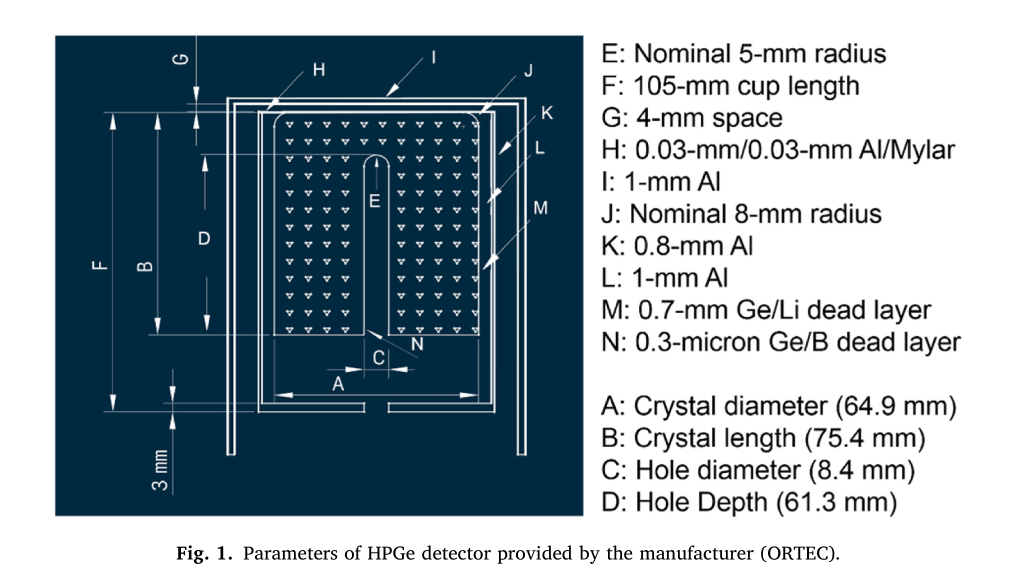
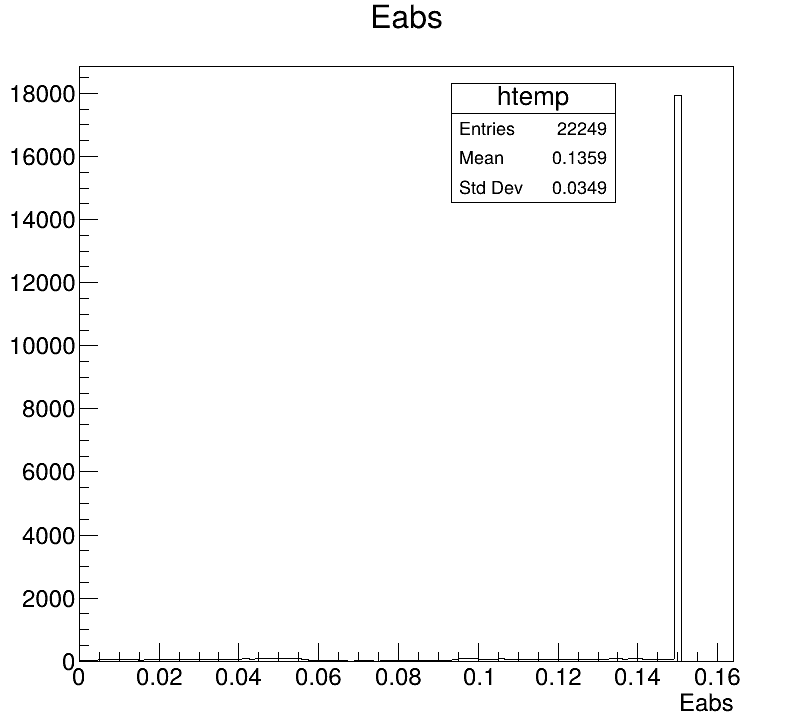
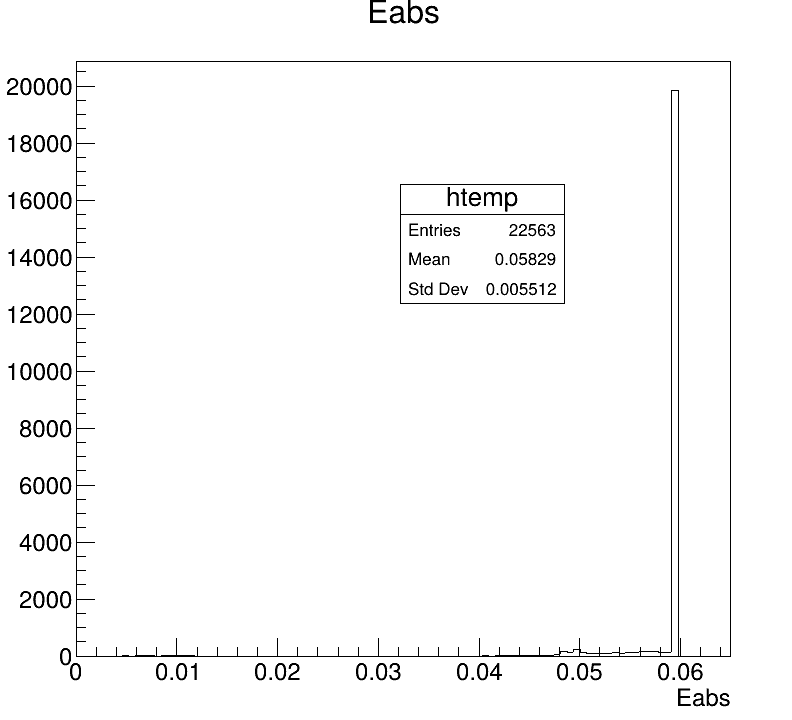
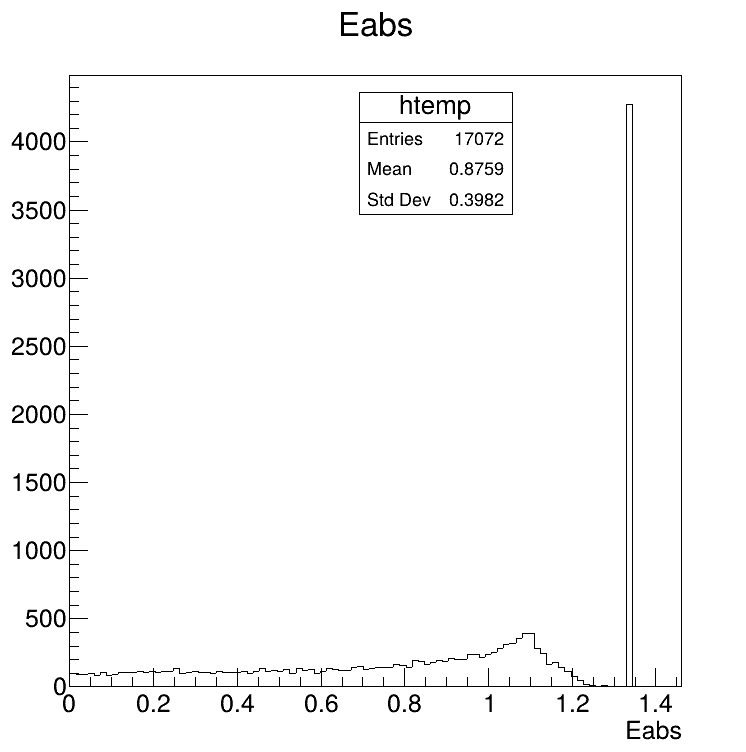
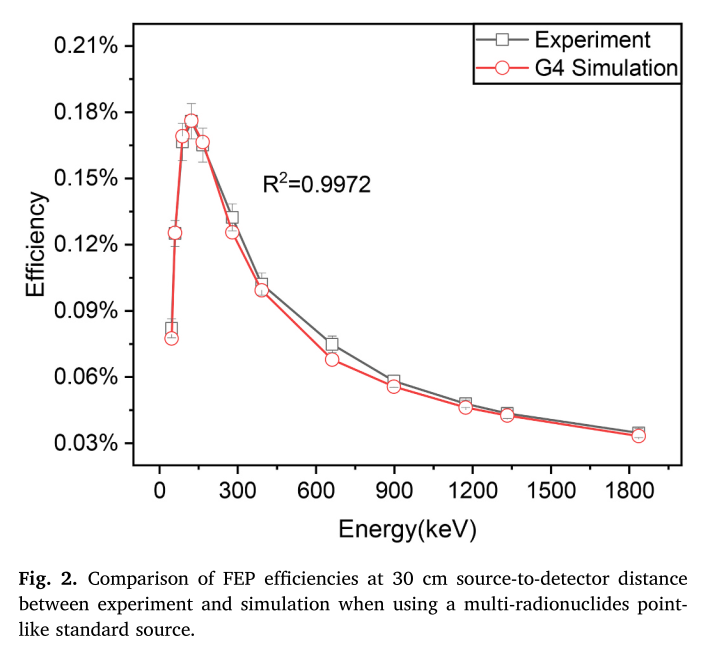
Hello everyone! I’m working on simulate the efficiency of a HPGe detector from a paper. What bothers me is that in the high energy area >150 keV, my result is the same as the paper. But in low energy area, the efficiency curve occurs at around 100 keV, not about 150 keV that many papers showed. How i collect the energy deposite is the sensitive detector.
} and fill the added energy into root. It is based on exampleB4c. The efficiency calculation method is obtained by dividing the number of full-energy photons received by the number of full-energy photons emitted. Does anyone have any idea about why in low energy area, i collect more photon than expected?
This might be a bit hard to troubleshoot… First of all, are you sure you are properly simulating all relevant volumes? Detector entrance window, collimators, crystal dimensions are correct, etc…
What do you mean by “dividing the number of full-energy photons received by the number of full-energy photons emitted”?
Can you share the paper you are referring to? And a plot of yours?
The mean free path of 150 keV photons is about 2 cm in copper. The housing around the detector begins to matter more and more at lower energies as @ripires has mentioned. Surface treatment effects begin to matter a lot more at lower energies. The type of detector, the dead layer, and the shape of the weighting potential. Not including these effects will mean you overestimate your efficiency compared to a real world detector.
Thank you ripries. The efficiency i calculate is the FEP, full energy peak efficiency. The paper i referred to is Redirecting . I’ve used the modified parameters, the combination of germanium crystal diameter of 58.8 mm, top dead layer of 0.45 mm and lateral dead layer of 0.1 mm.
You’re already on the right track! Taking your previous figures, I would also double-check the following:
1. Are you simulating the hole in the Ge crystal?
2. Are you simulating volumes H: 0.03 mm/0.03 mm Al/Mylar and I: 1 mm Al?
3. Be careful of the definitions of “half-length” and “half-depth” in the construction of G4 objects.